Wedding veils come loaded with history – tradition, expectation, assumption.
But for many modern couples, a veil isn’t about symbolism at all. It’s about shape, movement texture, drama or softness.
If you love the idea of a veil but don’t see yourself in standard ivory cathedral territory, this guide is for you. From lace-edged mantillas and embroidered illustrations to dip-dye colour and sculptural capes here’s how to choose a veil that feels intentional rather than obligatory.
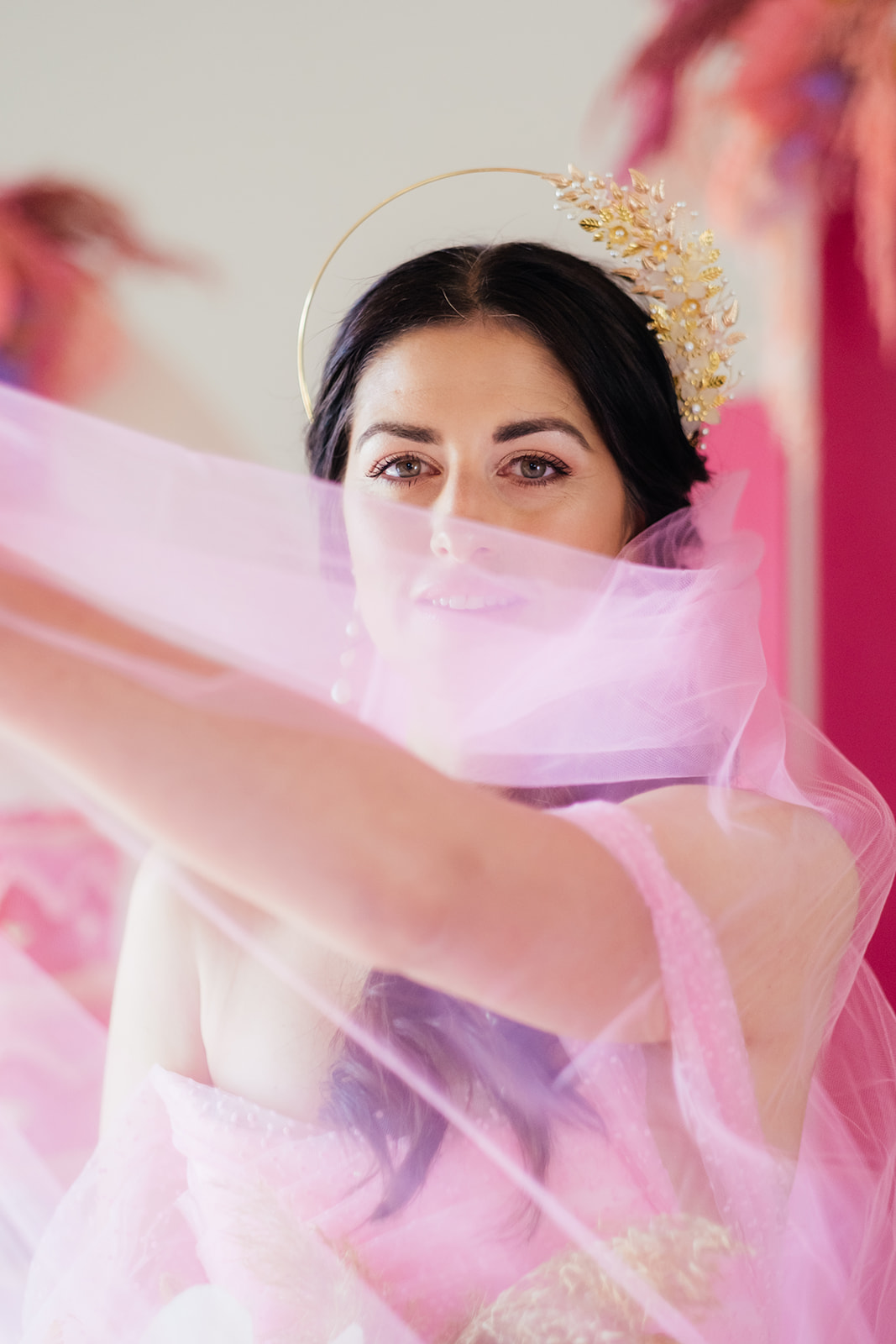
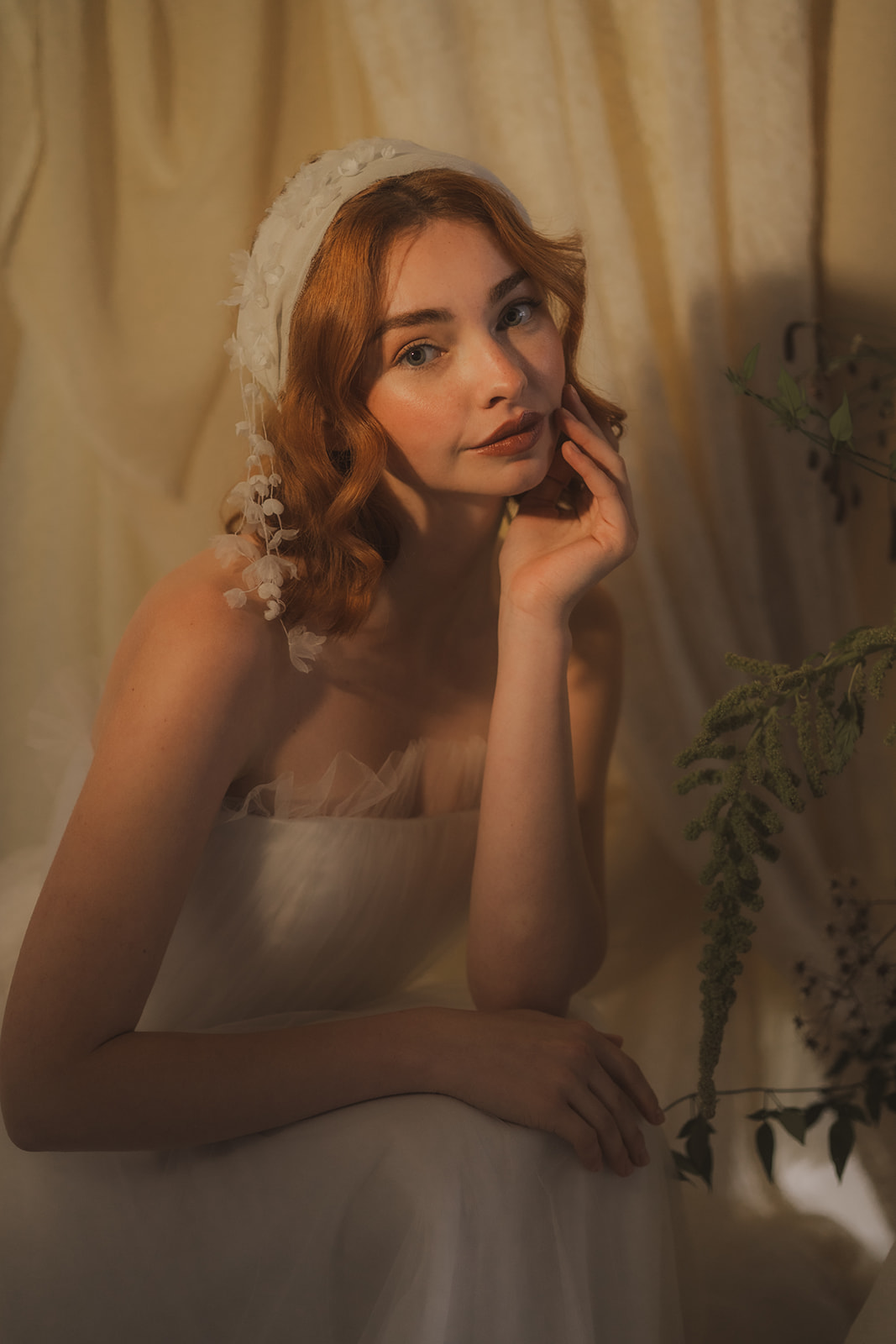
Visionary Veils - Big Fish Photography
Different Wedding Veil styles
Mantilla Veil by Rebecca Anne Designs - Lauren Elizabeth Photography
Most people picture fabric gathered onto a comb, but that’s only one option. Wedding veils can sit flat or full, structured or barely there, and each one changes the silhouette in a different way.
Some fall in a single layer, like drop veils or mantillas. Others are gathered into tiers, adding volume or softness.
“A mantilla is worn further forward on the head and softly frames the face, drawing attention to the lace or embroidered edge. A single tier veil feels flatter and more minimal while a two-tier veil adds softness and volume.”
Fullness matters too.
“A gathered veil creates cloud-like movement, while a drop veil falls sleek and clean for a more contemporary look.”
Instead of asking which style is correct, think about how you want it to sit.
Singel Tier Veil by Bex Bridal
wedding Veil length
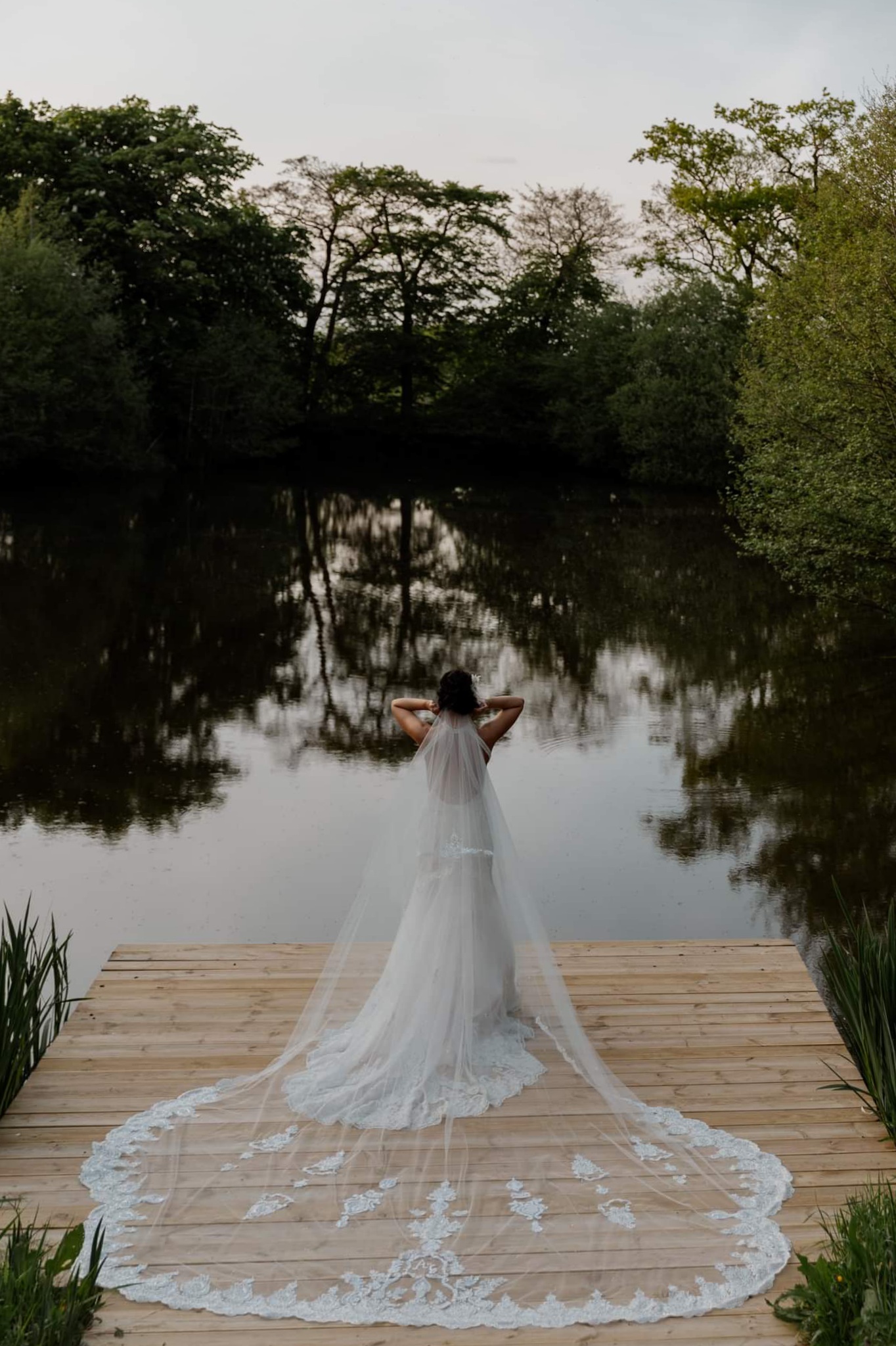
Lace edge veil by Lisa Carrington Couture
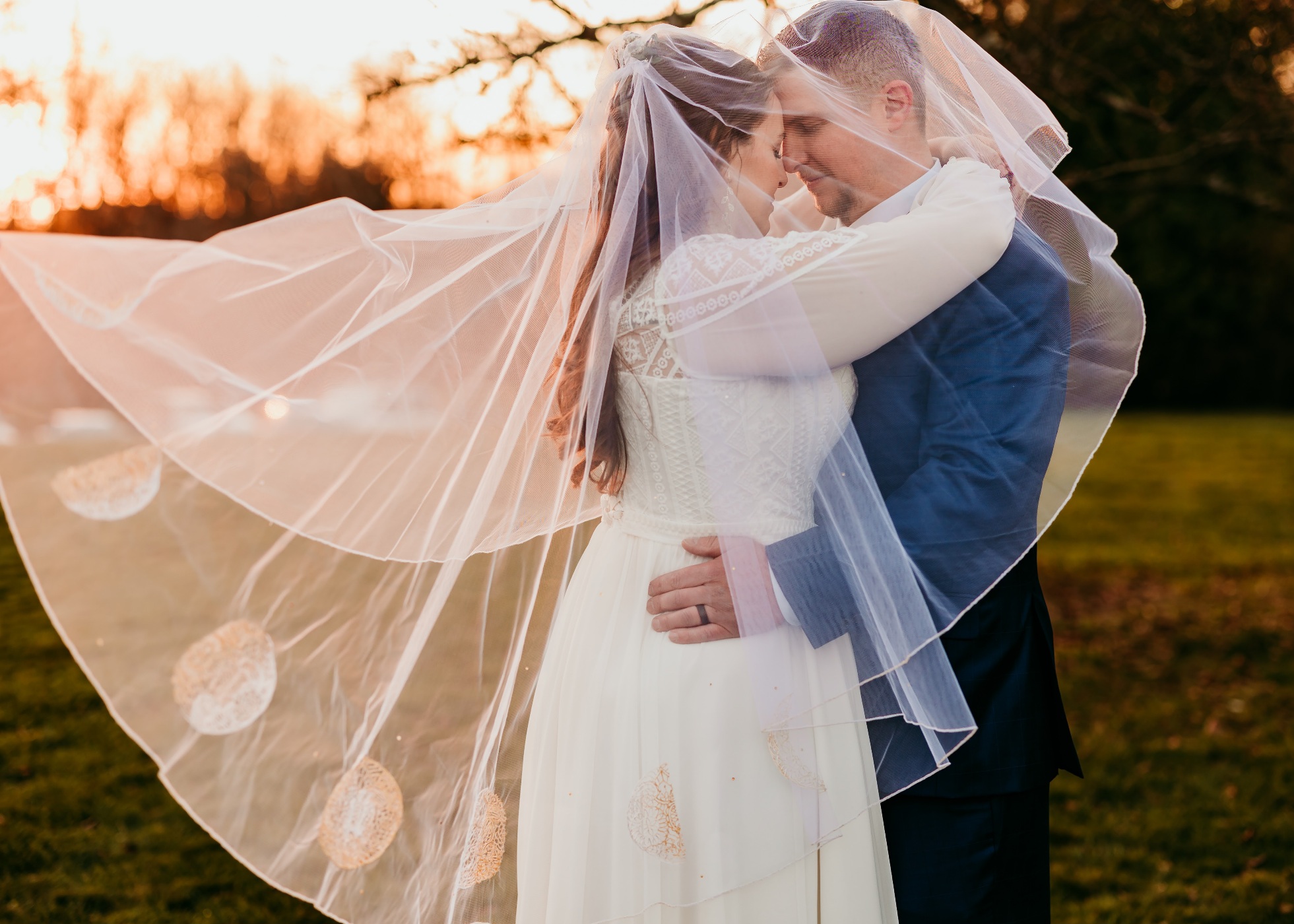
Length changes the mood instantly. Fingertip feels relaxed and easy to move in, chapel length adds presence, and cathedral length brings drama.
There are styling principles, but no rules. A minimal dress can look striking with a long veil, while a detailed one might suit something lighter. Or you might ignore that entirely.
“The practical difference between veils often comes down to the venue… going for a short veil or a long one is down to personal choice.”
It’s also worth checking measurements. While off-the-peg veils are usually made to set measurements, not all veil lengths are standardised. One designer’s cathedral may differ from another’s. If you’re working with a designer, they can tailor the length so it falls exactly where you want it in relation to your gown and train.
Singel Tier Veil by Rebecca Anne Designs - Per Sempre Weddings
Different Wedding Veil Fabrics
Two Tier Veil by Rebecca Anne Designs - Lauren Elizabeth Photography
Fabric controls attitude.
Fine tulle gives you that classic sheer, floating effect, but heavier or layered tulle creates bounce and volume. If you’ve ever seen an 80s-inspired, big, unapologetic veil, that structure comes from the fabric choice.
“A soft, fluid tulle will fall and move almost like silk – gentle and airy. A stiffer tulle holds structure and volume, creating more drama and shape. ” Expert Rebecca of Rebecca Anne Designs explains.
“A delicate Chantilly lace can feel whisper-light… while heavier corded lace creates definition and presence.”
Movement matters – a soft veil drifts whereas a structured one bounces.
“Also consider whether the back of your dress will still be visible. If you want that detail to show through, an illusion veil may work better,”Lisa Carrington Couture adds.
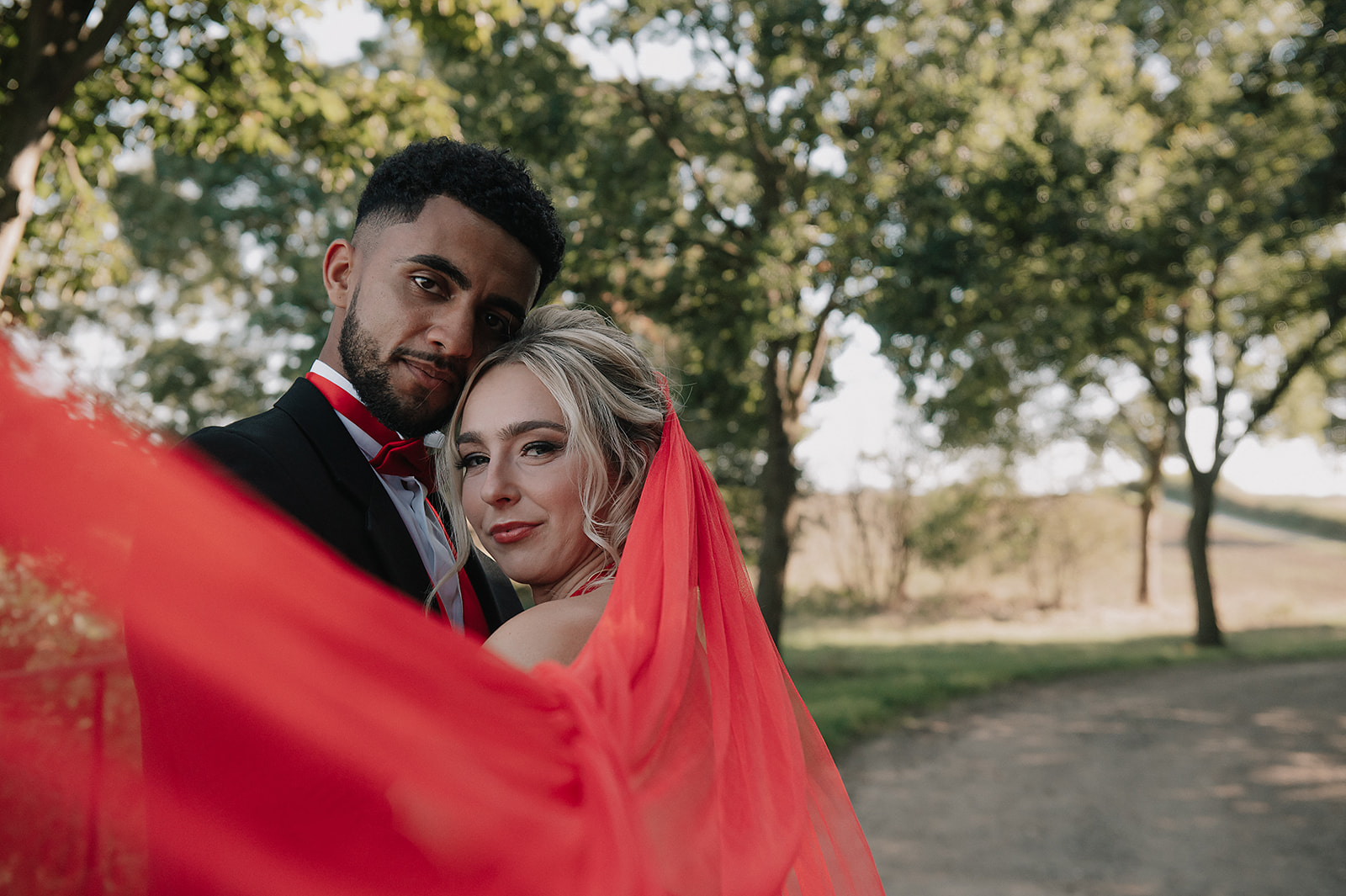
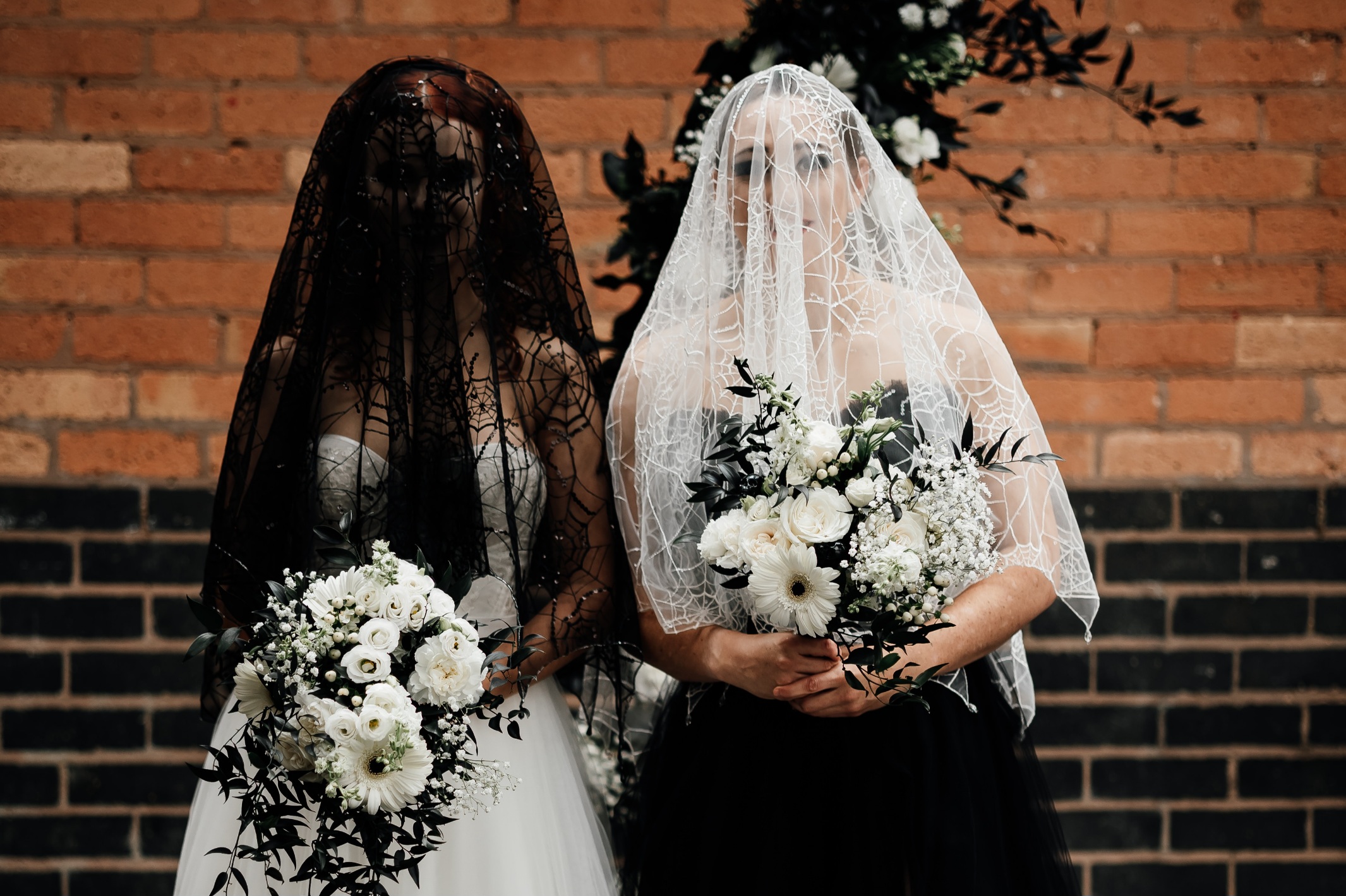
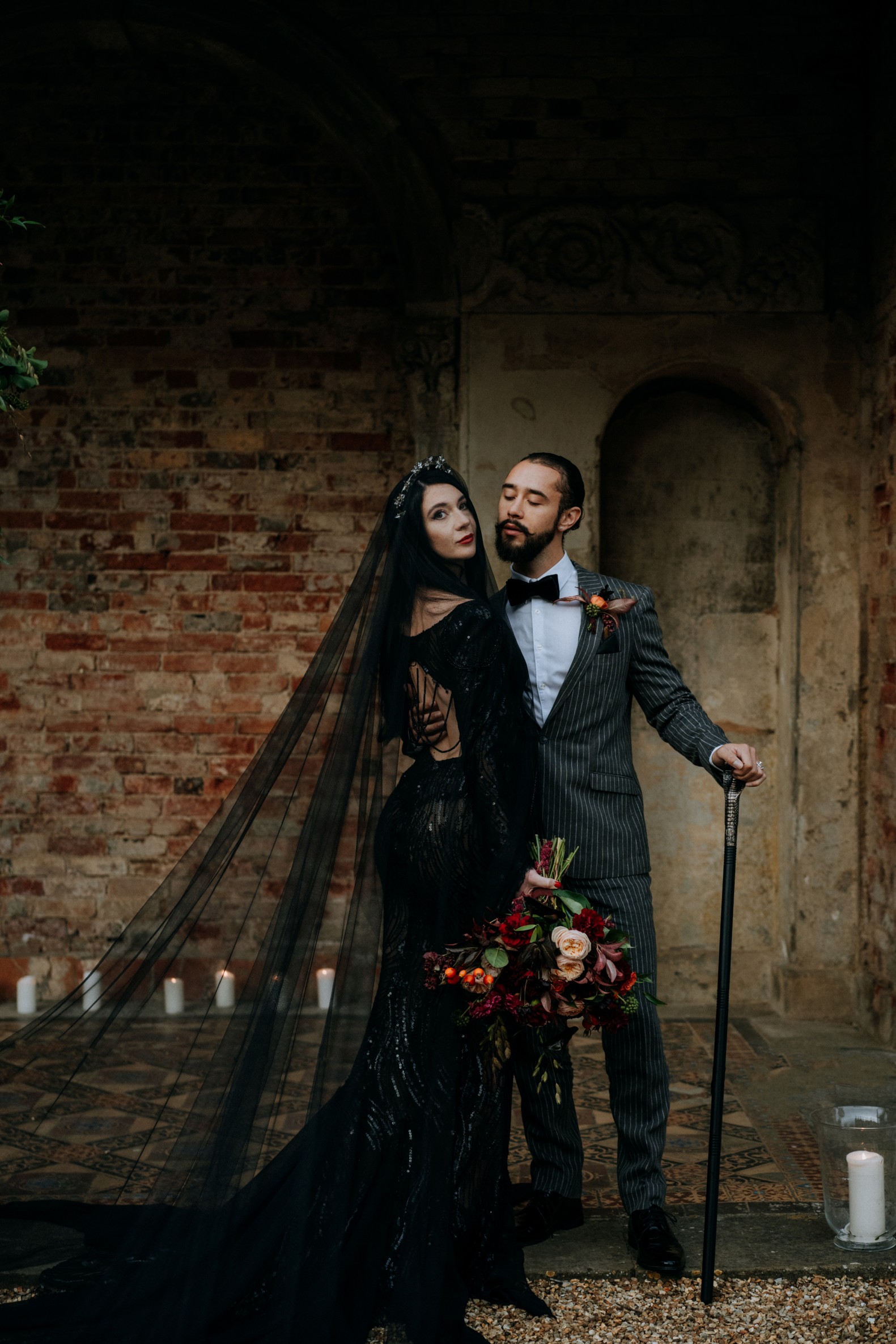
Colour shifts the balance of an outfit. A dip-dye veil adds depth, black feels more theatrical, and a coloured edge frames the silhouette more deliberately.
“Colour is a fantastic way to express your personality. Even if you’re wearing a traditional white gown, adding a pop of colour to match your wedding theme or colour palette can be a beautiful, cohesive touch!” Arune at Nine Spells tells us.
Even if you are staying within traditional shades, colour still matters.
“You’d be surprised how many shades of white and ivory exist. Always place the veil next to your dress to check the shade, or request a swatch if you’re having your veil made,” says Lisa Carrington Couture
'This Is Not A Phase' Embroidered Veil by Holly Winter Couture - Wildflower Wedding Collective
Illustration
Illustration turns a veil into storytelling. Embroidered moons, florals, script, swallows or symbolic motifs make the veil part of the narrative rather than a finishing touch.
“My couples like the veil to tell their story, as individuals and as a couple. This can mean simply motifs and images of things they like such as the phases of the moon, or really personal details such as in-jokes, pets or shelves of books with customised titles like on my Bibliophile veils.
Anything is possible, from discreet initials and dates to photo-realistic images, so it can be a really personal way to celebrate your relationship and your wedding day.” Holly Winter Couture explains.
Embroidered Veil by Rebecca Anne Designs - Kamila Nowak Photography
“Embellishments can completely transform the overall look of a veil. A plain veil is like a blank canvas, while trims, texture, and decorative details can turn it into a true statement piece. For example, tassel trim creates a more bohemian feel, while ruffle trim adds volume and a playful touch. But, everyone has a different tolerance for what they are willing to endure for fashion, so comfort should always be part of the decision,” says Arune at Nine Spells
Lovebug Veil by Madison Chamberlain
Statement veils work best when they’re chosen on purpose. They can lead the look, clash deliberately, echo colours already in your outfit or introduce something entirely new.
“Choose something that feels like you. A veil shouldn’t feel like an afterthought. It can really set the tone for the whole look. If you’re drawn to something bold or unexpected, lean into that. Have fun with it!”Madison Chamberlain
The only real guideline is intention. If it feels deliberate, not accidental, it will hold its own.
Capes, wings and veil alternatives
Cape by Bex Brides - Emma Ryan Photography
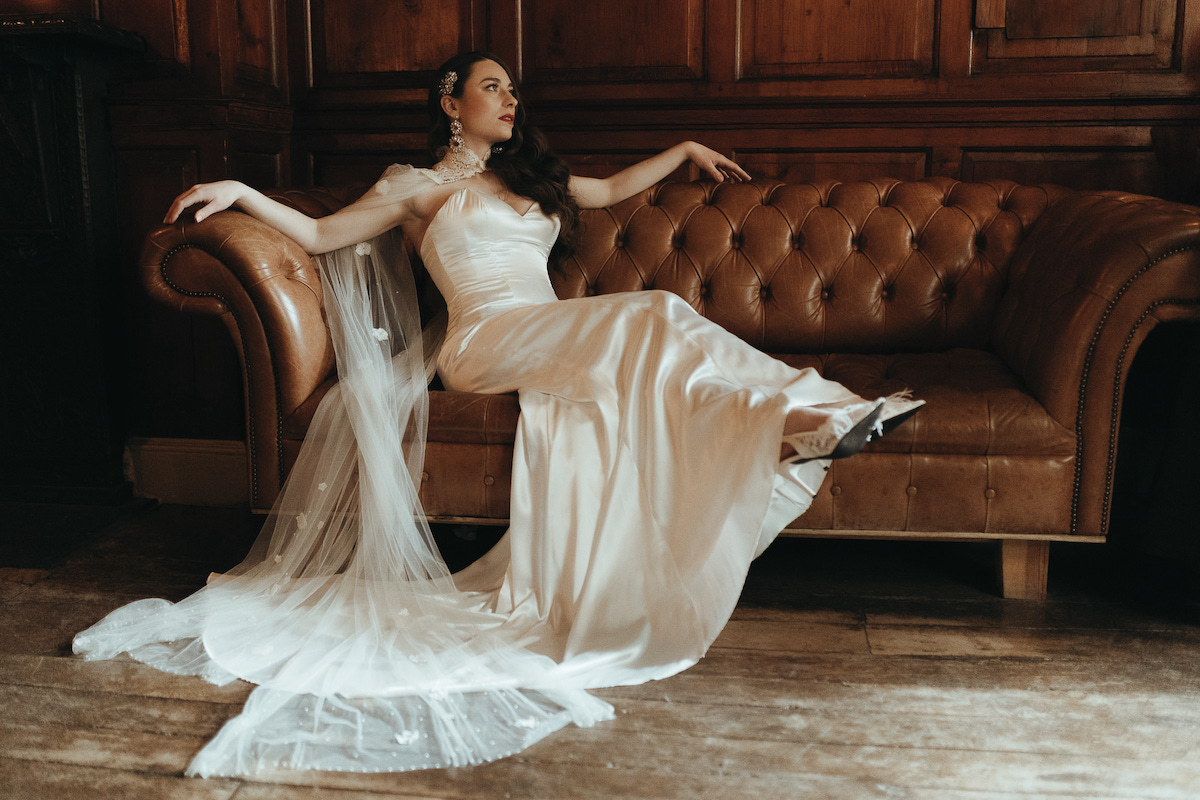
“You could have it as a cape, cloak, overskirt or ‘wings’ attached to your back or arms,”Holly Winter Couture explains.
Capes vary in length and structure. Some attach at the shoulders, others at the neckline, and some fall across both front and back. Wings sit at each shoulder and move independently.
Other fabric options would be sequinned caplets, faux fur and cloaks which all bring their own vibe depending on how you style them.
The Lucky Sixpence Crown - Kirsty Mackenzie Photography
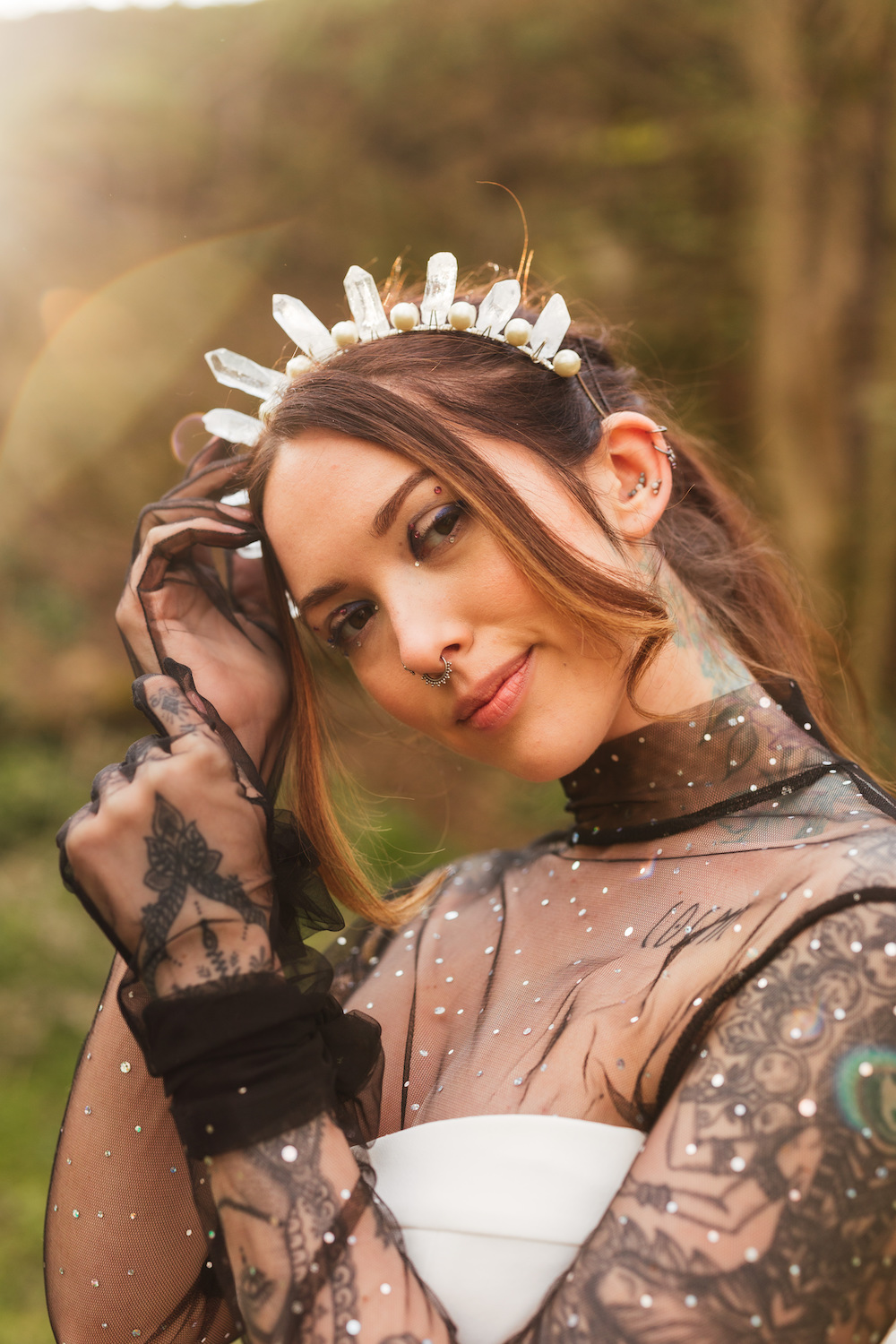
Hair accessories introduce structure and detail in a different way.
“A headpiece can reshape your whole look. A halo or crown can add height and drama, while a side comb or hair vine can draw the eye across the hairstyle. Even a small piece can shift an outfit vibe from whimsical to edgy, festival to vintage. The most important thing is to choose something that feels like you.” The Lucky Sixpence tells us.
“A headpiece is something you can wear for the whole wedding day, from ceremony to dancing. Another bonus with a well-designed hair accessory is the potential to re-wear them. Unlike a veil, accessories can be worn for anniversaries, parties or special occasions. Every time you get them out you can think back on your special day.”
Hair pins by The Lucky Sixpence - Pike Photography
Cape by Lisa Carrington Couture - Arielinblue Photography
Molly Francis Studio - Katie Hilton Photography
Dip Dye Cape by Bex Brides - Aimee Laoise Photography